


Expert solutions, backed by 20 years of expertise
Turn your idea into reality with confidence
We validate your idea from clinical, technical, and regulatory perspectives, setting a solid foundation for development.
We clarify the clinical use case, test key technical assumptions, and assess regulatory feasibility. Using structured project management and ISO-compliant processes, we define the most viable development path in terms of scope, risks, costs, and timelines.
We build early functional prototypes (POCs) to test feasibility, refine specifications, and gather early feedback. Alongside this, we produce supporting documentation, including initial DHF entries, design inputs, and regulatory guidance, providing a solid foundation for the rest of development.
What you get
Early functional prototypes (POCs) to test feasibility, refine specifications, and gather feedback, along with supporting documentation—including initial DHF entries, design inputs, and regulatory guidance—that provides a solid foundation for the rest of development.
Concept and feasibility


At this stage, your proof of concept (POC) has already been developed using the documentation defined upstream.
We now consolidate this foundation by reviewing the Product Development Plan (DDP), formalizing user needs, and translating them into a Design Input Document (DID). In parallel, we initiate risk management activities (RMF, risk analysis) and structure the regulatory framework, including applicable standards and GSPR. All inputs are progressively integrated into a Design Specification Document that frames the next development steps.
What you get
A clear and compliant development baseline, including a reviewed DDP, documented user needs, a complete DID, initial risk management files, and a defined regulatory framework. This phase delivers a robust Design Specification Document that reduces uncertainty and prepares your device for detailed design, verification, and regulatory approval.
Design input
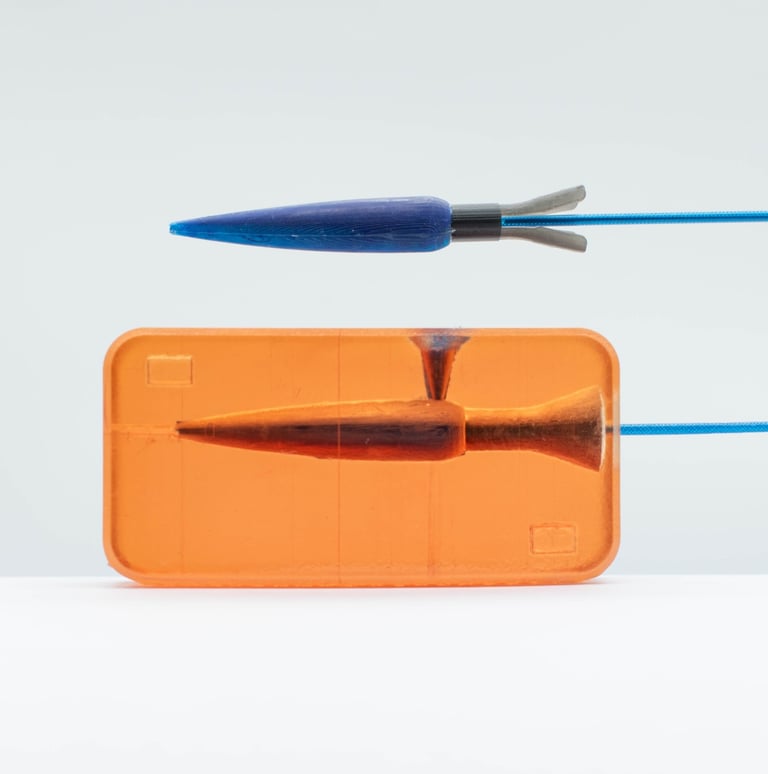
In this phase, we finalize the Design Specification Document (DSD) and translate it into one or more manufactured prototypes.
These prototypes are tested to confirm performance, manufacturability, and alignment with design inputs. Once the design proves stable and no further modifications are required, we proceed with a formal design freeze, marking the end of iterative development. Depending on your needs, additional prototype samples can be produced to support internal reviews, stakeholders, or downstream activities. In parallel, we prepare the Verification and Validation (V&V) strategy by defining the test plans required for the next phase.
What you get
A frozen and fully documented design, manufactured and tested prototypes, and a complete DSD serving as the reference baseline for industrialization. You also receive prepared V&V test plans, ensuring a smooth transition to verification, validation, and regulatory submission—while minimizing redesign risk, delays, and unexpected costs.
Design output
Depending on the project’s needs, targeted in vitro, ex vivo, or in vivo tests may be performed to generate specific safety and performance data.
In vitro testing includes mechanical and functional evaluations using dedicated test setups or devices developed in-house. Ex vivo tests are conducted on isolated organs or tissues to assess device interaction under controlled biological conditions, while in vivo studies are used when necessary to evaluate device behavior within a living system.
These tests may be carried out before design freeze to support design decisions and risk reduction, or later as part of the Verification & Validation (V&V) phase. When in vivo testing is required prior to clinical evaluation, studies are conducted in collaboration with IHU Strasbourg, in compliance with Good Laboratory Practices (GLP), applicable regulations, and the 3R principles (Replace, Reduce, Refine)
Testing the prototype
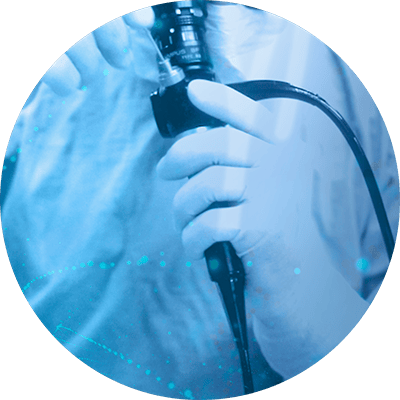
In this phase, we execute the Verification and Validation (V&V) activities to formally demonstrate that the device meets both its design requirements and intended user needs. We establish and complete the Design Verification documentation (DVD), performing defined tests, analyses, and inspections to confirm that all design inputs and specifications are fulfilled by the selected solution. Validation activities ensure that the device performs as intended in representative conditions of use. Using tailored test protocols, advanced testing tools, and realistic simulations, we assess performance, reliability, and durability, including under extreme operating conditions.
What you get
A complete and traceable V&V evidence package, including executed test reports and Design Verification documentation, demonstrating compliance with requirements and user needs. This phase delivers high confidence in device performance, reduces regulatory risk, and provides robust evidence ready for regulatory submission and market approval.
V&V testing
After successful Verification and Validation, the project enters the design transfer phase. We finalize the Device Master Record (DMR), consolidating all specifications, procedures, and controls, and validate manufacturing processes to ensure robustness, repeatability, and regulatory compliance. Regulatory documentation is completed and prepared for CE and FDA submission, formally closing development and preparing the device for industrialization.
Following design release, you can choose Protomed as legal manufacturer or produce the device themselves. Our expertise supports flexible manufacturing strategies across volumes and complexity levels, ensuring a smooth, compliant, and reliable transition to production.
Design transfer
© 2026. All rights reserved.


Site map
Contract medical device development in cardiovascular and minimally invasive surgery.